


By: Kiara Wilkerson (’22), Staff Writer
October is the official start of spooky season, and with this month flying by at supersonic speeds, Halloween will be here before you know it. This holiday calls for trick-or-treating, haunted house tours, pumpkin carving, and, even better, scary movies. But, because of ‘rona, Halloween will look pretty unusual this year.
Since it is not safe to go trick-or-treating with friends or throw costume parties, the only thing to really do is stay inside with a bowl of candy and have a movie marathon. The most popular movies that I hear people talking about this year are Monster House, The Addams Family, all five of the Scary Movie movies, Hocus Pocus, and even Coraline. These are classics that most of us grew up with and thus bring a sense of nostalgia to the holiday. However, all Halloween movies are not created equal.
As you have probably noticed, not all scary movies are actually scary. Some are more on the funny side while others can be realistically violent and gory. This is because horror has the range to incorporate things like mystery, ghostly presences, violence, gothic elements and more into its genre. Within this genre comes several tropes that can provide the movie with an eerie tone or, on the other hand, more comedic elements. With horror encompassing such a vast range of tropes, the mainstream movies that are primarily watched and reproduced fail to produce unique storylines that incorporate main characters who aren’t always white. Notice how all of the movies mentioned above only have one or two black characters, if that many (except for the Scary Movie movies, but we’ll get into that later). But, Black people being underrepresented in films isn’t something that we are just now noticing. It’s been this way since the origin of horror films in 1896.
Ever since Black people were casted in horror films, the roles were always minor. These minor roles were included to support the main character who just so happened to be white. This also resulted in how we often see all the Black people dying first in horror films as a sacrifice for their white counterparts who end up making it out alive. Besides being the “sacrificial negro,” one of the most noticeable roles that Black people seem to play in horror films is being the source of comic relief.
Remember when I said we would get into the Scary Movie movies? Now, it’s time. Although there are several Black characters seen throughout these movies, they all serve the same purpose of breaking the tense atmosphere that horror brings. We all know that scene of Regina Hall dramatically screaming out of fear and saying things like “Ooh, I is scared!” in a movie theatre full of white people. Now, I’ll admit, I actually enjoy that movie and I love Regina Hall, but the recurring theme of horrific humor solely performed by Black people is getting old. These characteristics are mostly seen in films labeled as “Blacks in horror,” which is simply summarized as the exploitation of Black people and their stereotypical nature.
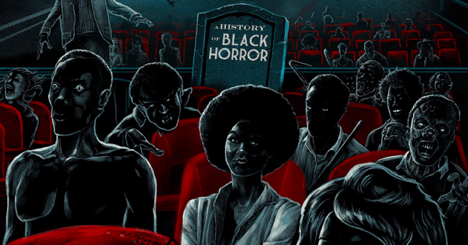
The opposite of “Blacks in horror” is “Black horror films.” These types of films are more related to Blackness in terms of racial identity, culture, and black experiences. In other words, it is the type of movie that accurately and appropriately casts and displays Black people when it comes to horror. They are no longer given these flat, one-dimensional characters that don’t really have a place in the plot. Instead, they are the main protagonists. Movies that best embody this genre of Black Horror include Colm McCarthy’s The Girl with All the Gifts (2016), Kasi Lemmons’ Eve’s Bayou (1998), and Jordan Peele’s Get Out (2017) and Us (2019). Instead of receiving just a few minutes of screen time, Black characters in these movies are followed from the beginning to the end and the audience actually get to witness some type of character development.
So, if you plan on watching a movie this year for Halloween, see if you can determine what—or if—Black people contribute to the plot, if there are any casted in the first place.
References:
Neal-Burgin, Xavier, director. Horror Noire: A History of Black Horror. Stage 3 Productions, 2019.
*I’d also like to credit my English professor Dr. Joseph L. Lewis for providing me with the knowledge on all things related to Black people and horror (http://josephlewis1.academia.edu/contact)


